
 Image 1 of 5
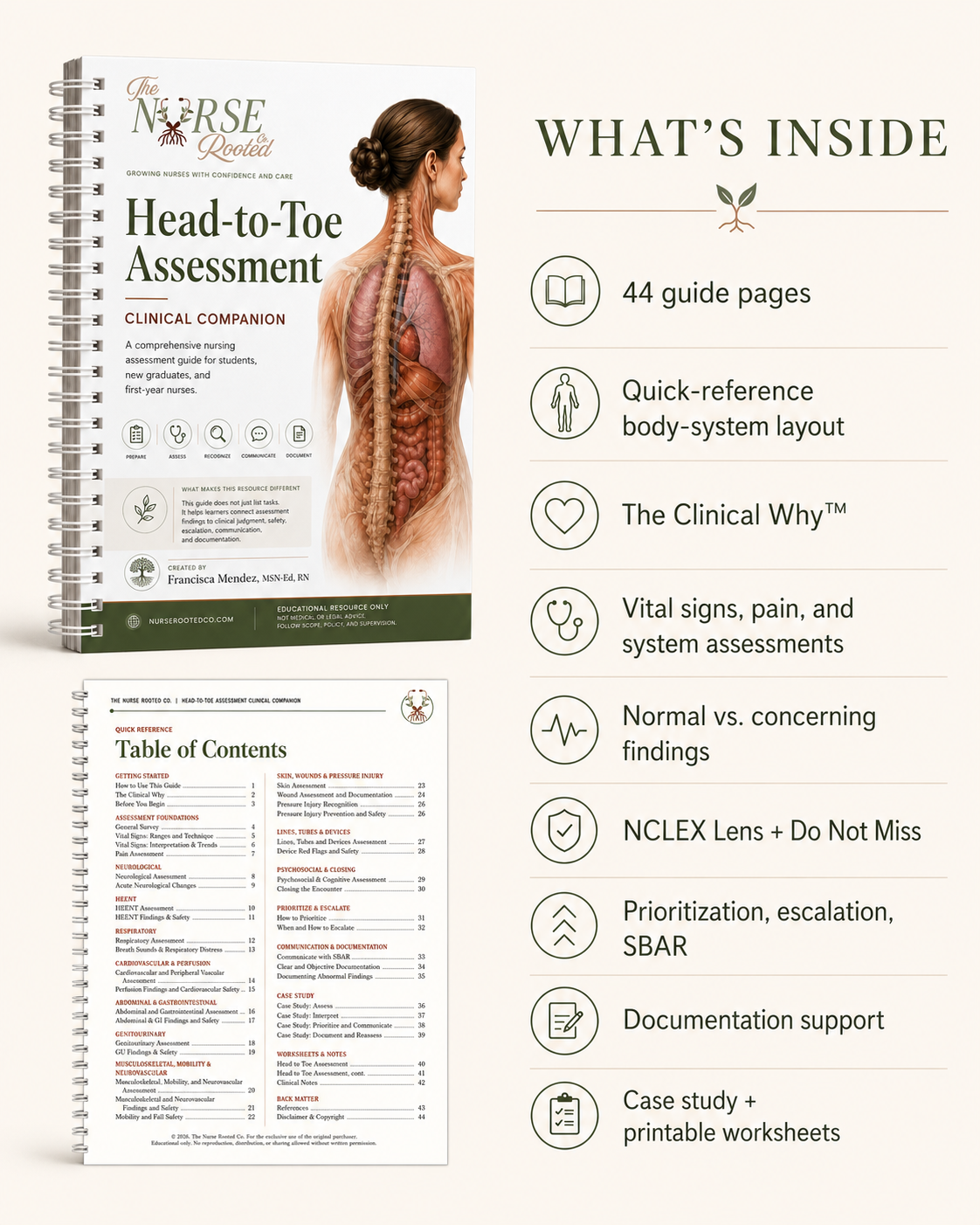 Image 2 of 5
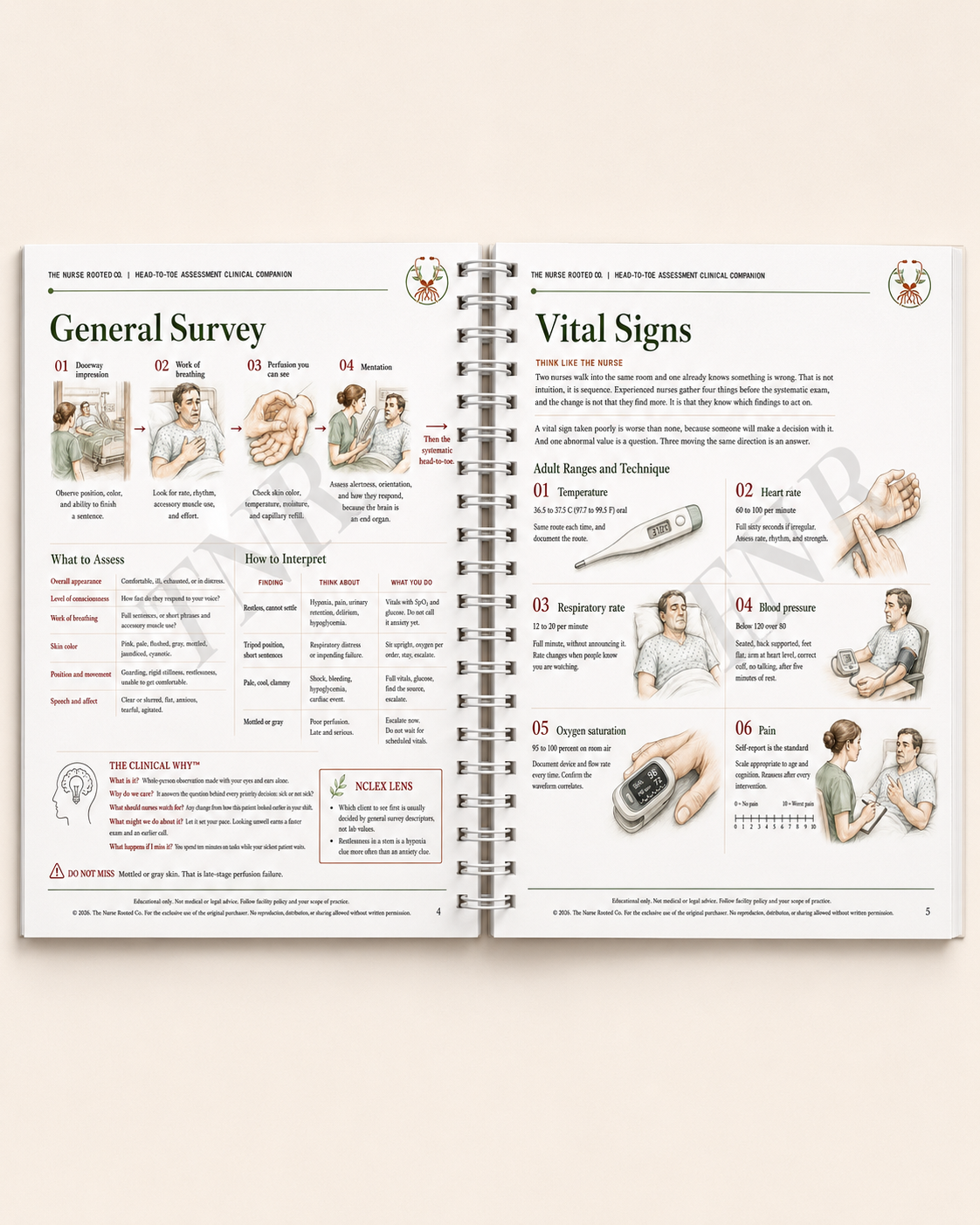 Image 3 of 5
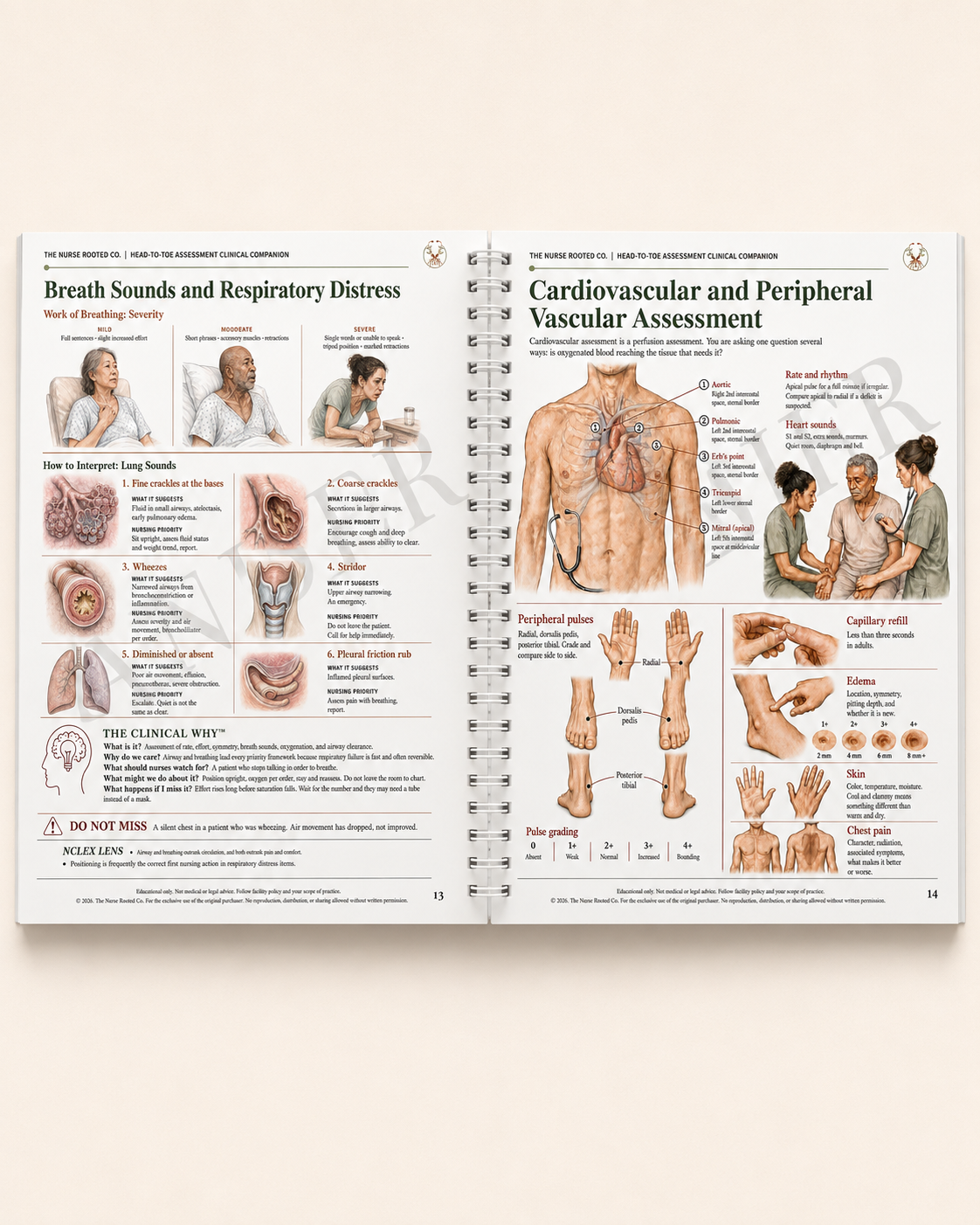 Image 4 of 5
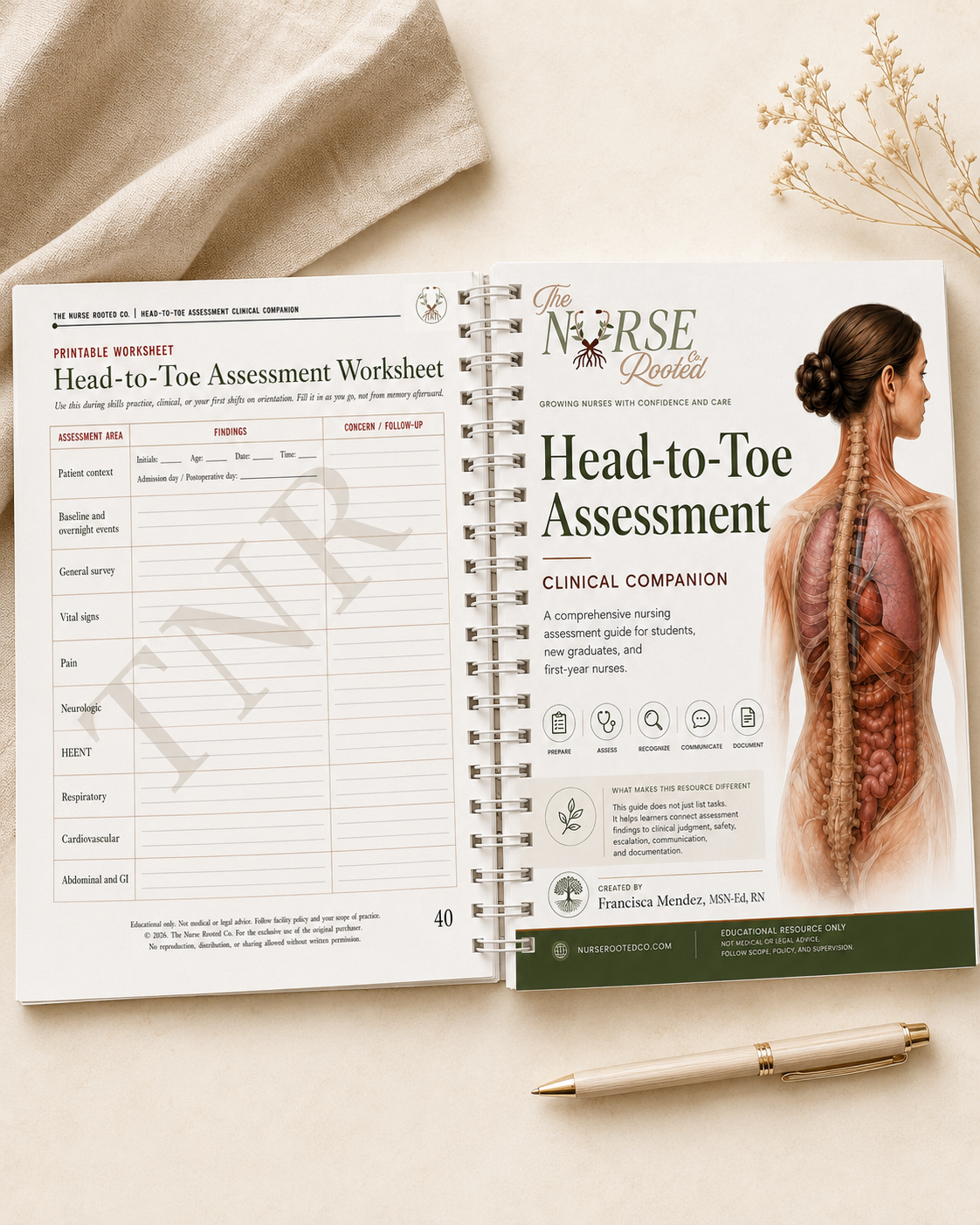 Image 5 of 5
Assessment is more than completing a checklist. It is noticing what matters, understanding what a finding means, recognizing when something has changed, and knowing what to do next.
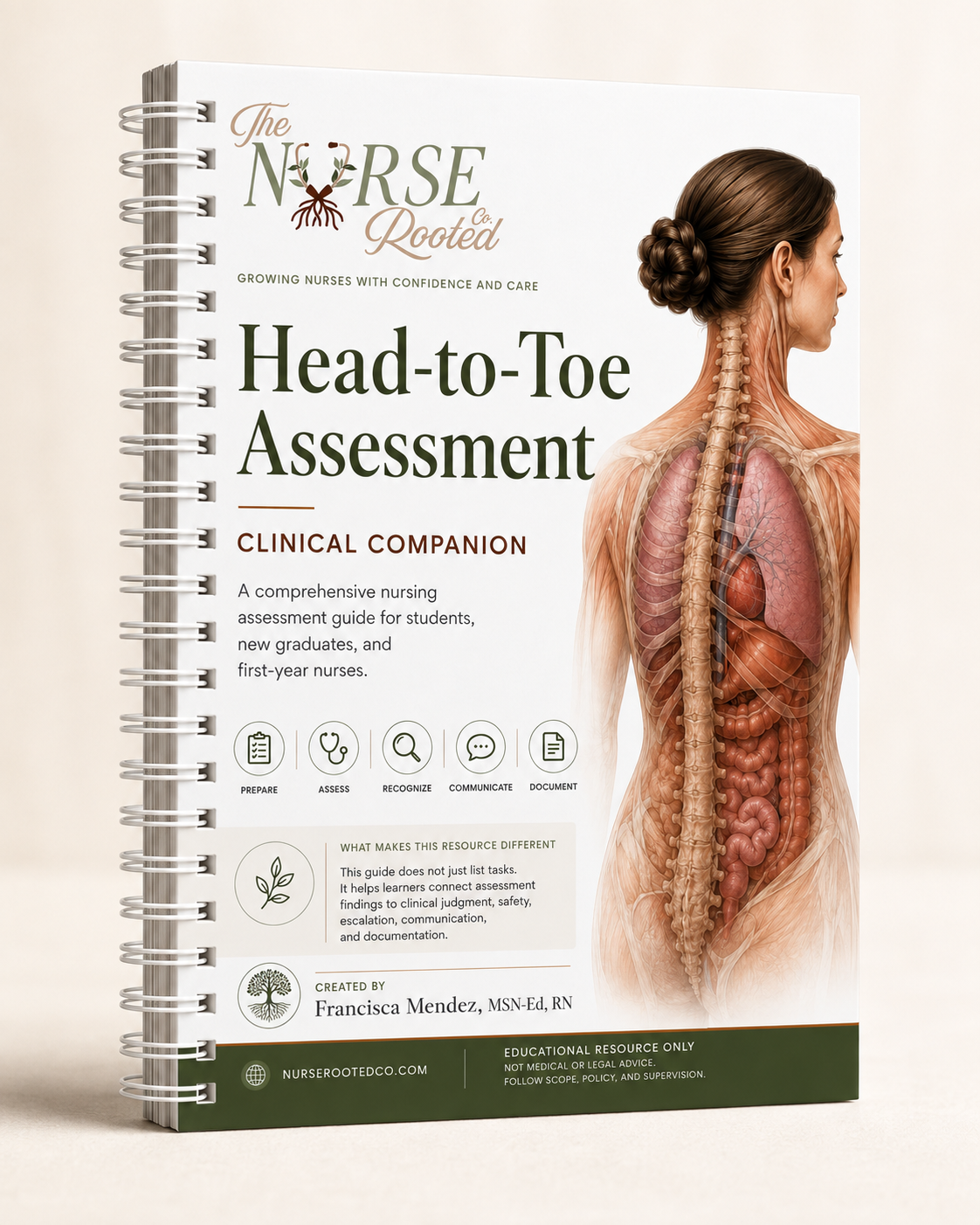
The Head-to-Toe Assessment Clinical Companion was created to help nursing students, new graduates, and first-year nurses build a more organized, confident approach to patient assessment. Instead of simply listing assessment steps, this guide connects findings to clinical judgment, safety, prioritization, communication, and documentation.
Organized from the first look at your patient through the complete head-to-toe assessment, the guide covers general survey, vital signs, pain, neurological, HEENT, respiratory, cardiovascular and perfusion, gastrointestinal, genitourinary, musculoskeletal and neurovascular assessment, mobility and fall safety, skin and wounds, lines/tubes/devices, psychosocial assessment, prioritization, escalation, SBAR, and documentation.
Throughout the companion, The Clinical Why™ encourages you to move beyond memorizing tasks by asking:
What is it?
Why do we care?
What should nurses watch for?
What might we do about it?
What happens if I miss it?
You'll also find NCLEX Lens callouts, Do Not Miss safety cues, normal-versus-concerning findings, clinical interpretation, prioritization guidance, escalation pathways, and practical examples designed to help you connect assessment findings to the bigger clinical picture.
44 guide pages of focused head-to-toe assessment content
Body-system assessment guidance and clinical interpretation
Vital sign ranges, technique, trends, and pain assessment
Neurological and acute neurological change recognition
Respiratory assessment, breath sounds, and respiratory distress
Cardiovascular, peripheral vascular, and perfusion assessment
GI, GU, musculoskeletal, mobility, neurovascular, skin, and wound assessment
Pressure injury recognition and prevention
Lines, tubes, and device assessment and safety
Psychosocial and cognitive assessment
Prioritization and escalation guidance
SBAR communication and documentation support
A progressive clinical case study
Printable head-to-toe assessment worksheets and clinical notes pages
Nursing students • New graduates • First-year nurses • Nurses strengthening assessment and clinical reasoning skills
Use it while studying, preparing for clinical, practicing assessment skills, during orientation, or as a quick-reference resource when you need to connect what you see with what it means and what comes next.
Format: Digital PDF
Page size: 8.5 × 11 in
For individual purchaser use only.
Educational resource only. Not medical or legal advice. Always follow your facility's policies, provider orders, and your scope of practice.
Assessment is more than completing a checklist. It is noticing what matters, understanding what a finding means, recognizing when something has changed, and knowing what to do next.
The Head-to-Toe Assessment Clinical Companion was created to help nursing students, new graduates, and first-year nurses build a more organized, confident approach to patient assessment. Instead of simply listing assessment steps, this guide connects findings to clinical judgment, safety, prioritization, communication, and documentation.
Organized from the first look at your patient through the complete head-to-toe assessment, the guide covers general survey, vital signs, pain, neurological, HEENT, respiratory, cardiovascular and perfusion, gastrointestinal, genitourinary, musculoskeletal and neurovascular assessment, mobility and fall safety, skin and wounds, lines/tubes/devices, psychosocial assessment, prioritization, escalation, SBAR, and documentation.
Throughout the companion, The Clinical Why™ encourages you to move beyond memorizing tasks by asking:
What is it?
Why do we care?
What should nurses watch for?
What might we do about it?
What happens if I miss it?
You'll also find NCLEX Lens callouts, Do Not Miss safety cues, normal-versus-concerning findings, clinical interpretation, prioritization guidance, escalation pathways, and practical examples designed to help you connect assessment findings to the bigger clinical picture.
44 guide pages of focused head-to-toe assessment content
Body-system assessment guidance and clinical interpretation
Vital sign ranges, technique, trends, and pain assessment
Neurological and acute neurological change recognition
Respiratory assessment, breath sounds, and respiratory distress
Cardiovascular, peripheral vascular, and perfusion assessment
GI, GU, musculoskeletal, mobility, neurovascular, skin, and wound assessment
Pressure injury recognition and prevention
Lines, tubes, and device assessment and safety
Psychosocial and cognitive assessment
Prioritization and escalation guidance
SBAR communication and documentation support
A progressive clinical case study
Printable head-to-toe assessment worksheets and clinical notes pages
Nursing students • New graduates • First-year nurses • Nurses strengthening assessment and clinical reasoning skills
Use it while studying, preparing for clinical, practicing assessment skills, during orientation, or as a quick-reference resource when you need to connect what you see with what it means and what comes next.
Format: Digital PDF
Page size: 8.5 × 11 in
For individual purchaser use only.
Educational resource only. Not medical or legal advice. Always follow your facility's policies, provider orders, and your scope of practice.